Skip to content
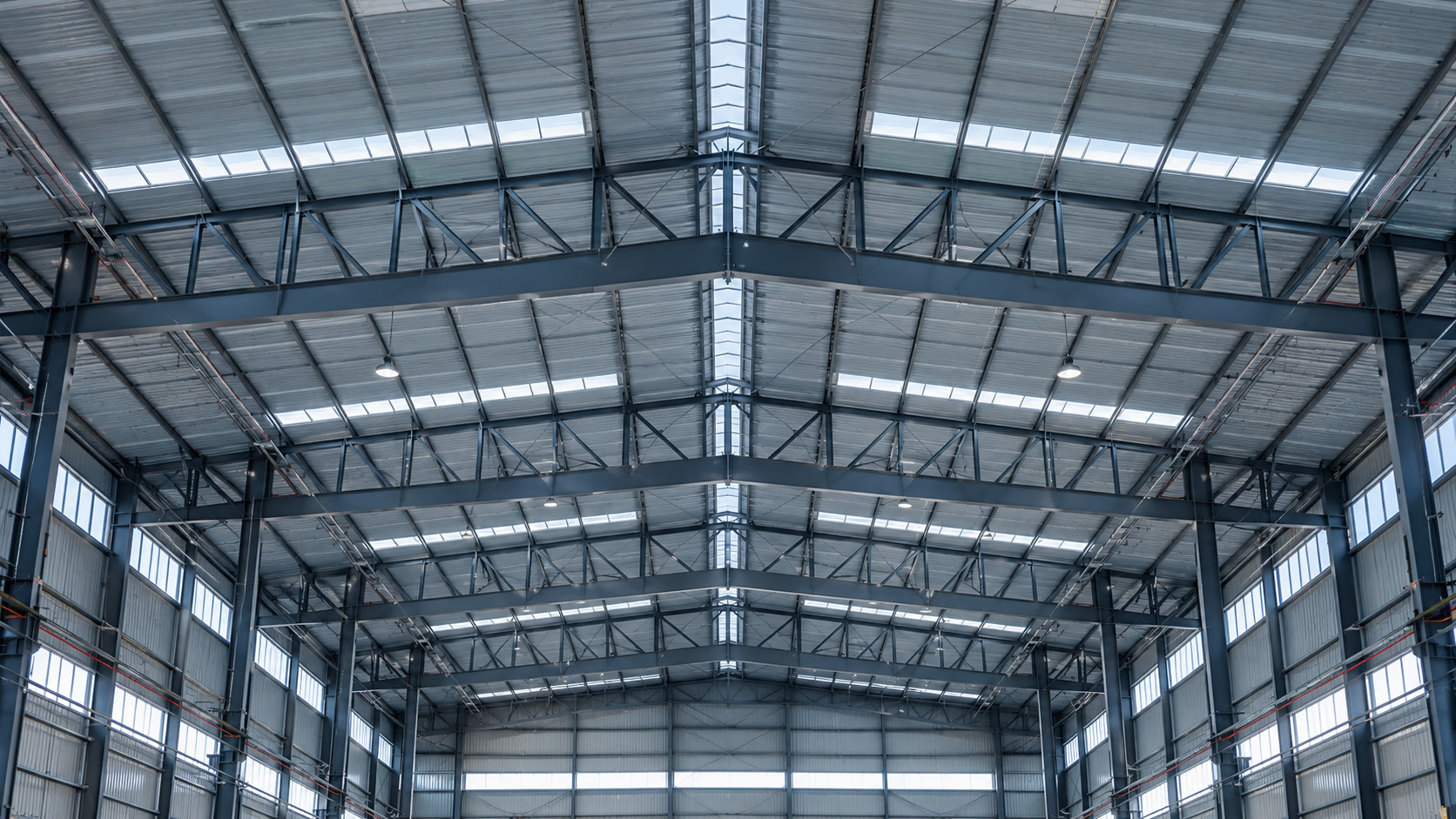
Clear-span roof and clerestory light over the warehouse.

A night on the park

The building, as the business uses it.

Eight places an occupier actually stands: the gate, the water line, the dock, the floor, the roof, the office, the night shift, and the name on the lease.

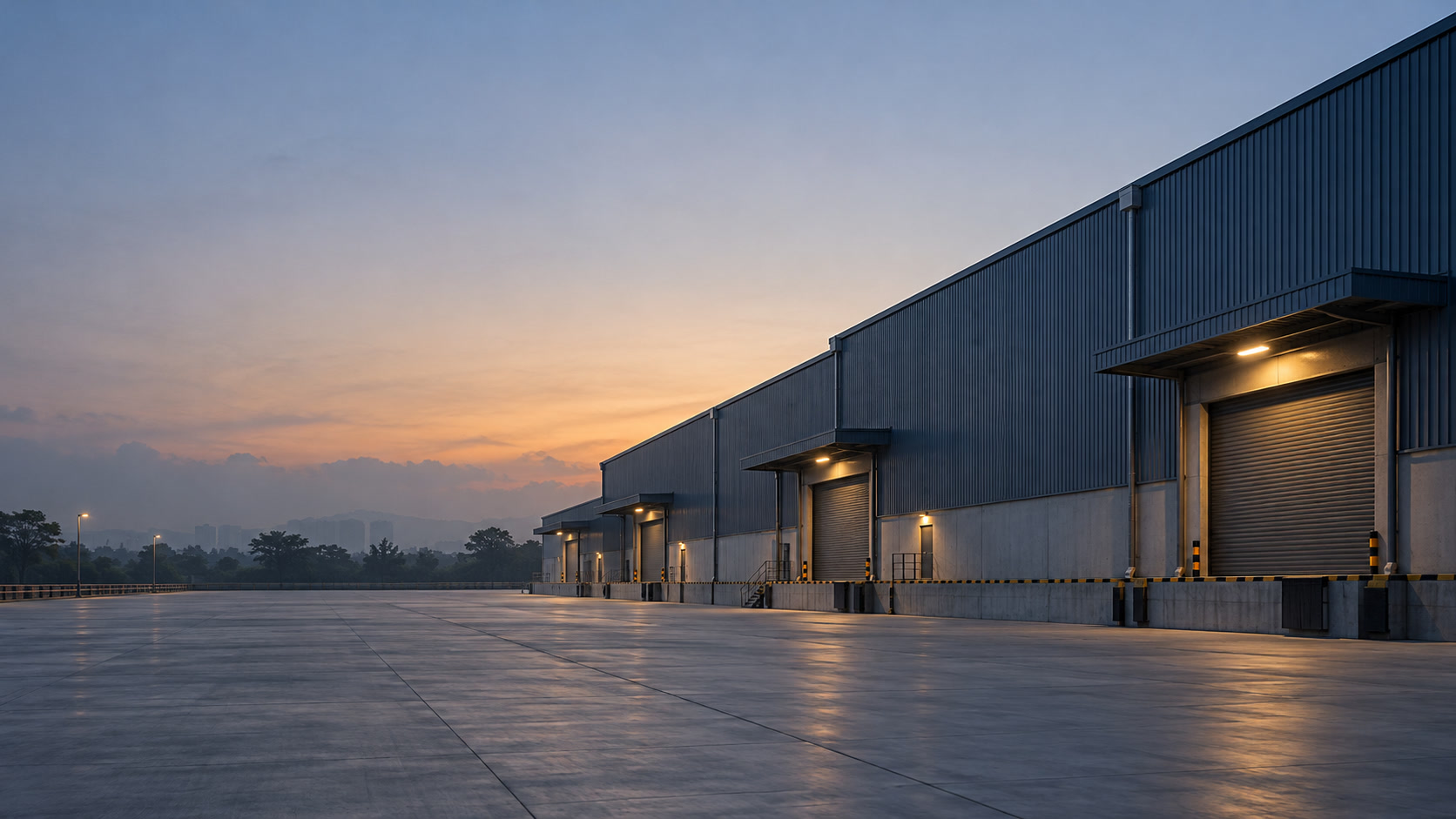
  1. Warehouse roofs in long parallel rows at dawn.

    01

    The gate

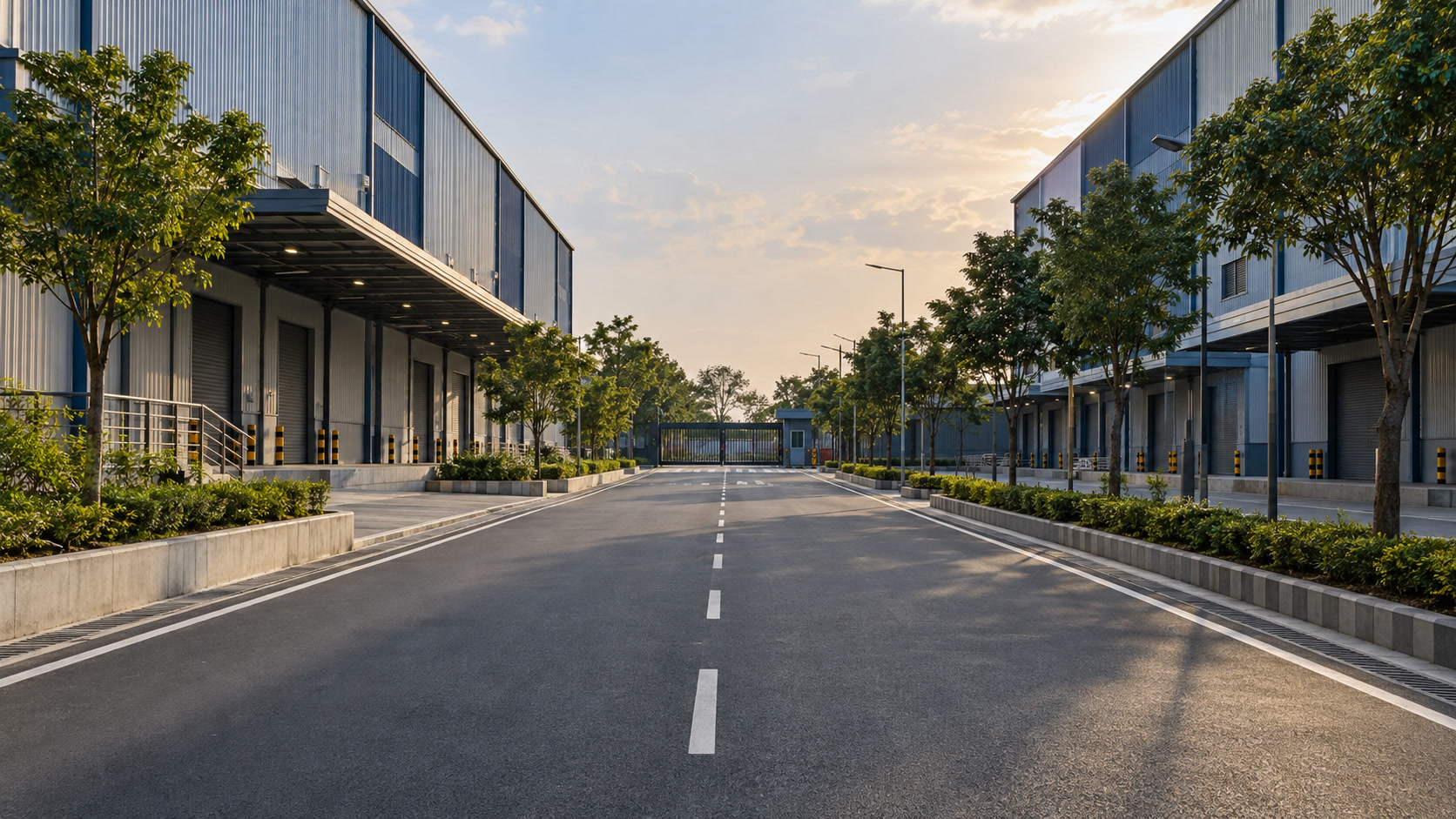
    A park is a border. Inventory worth more than the building walks through it every hour.

    Manned security, Panasonic CCTV, vigilance that does not close.

    Last-mile fleets, vendor vans, and the night shift all use the same gate. If the gate is informal, the occupier’s insurance and the occupier’s customer both notice.
  2. A raised concrete floor, dock doors in a line.

    02

    The plinth

    Mumbai’s monsoon does not negotiate with cartons on the floor.

    The premises sit two feet above the grade, against water-logging.

    A flooded bay is not a maintenance ticket. It is a lost dispatch, a rejected batch, and a customer who will not come back next season. The plinth is the cheapest insurance in the building.

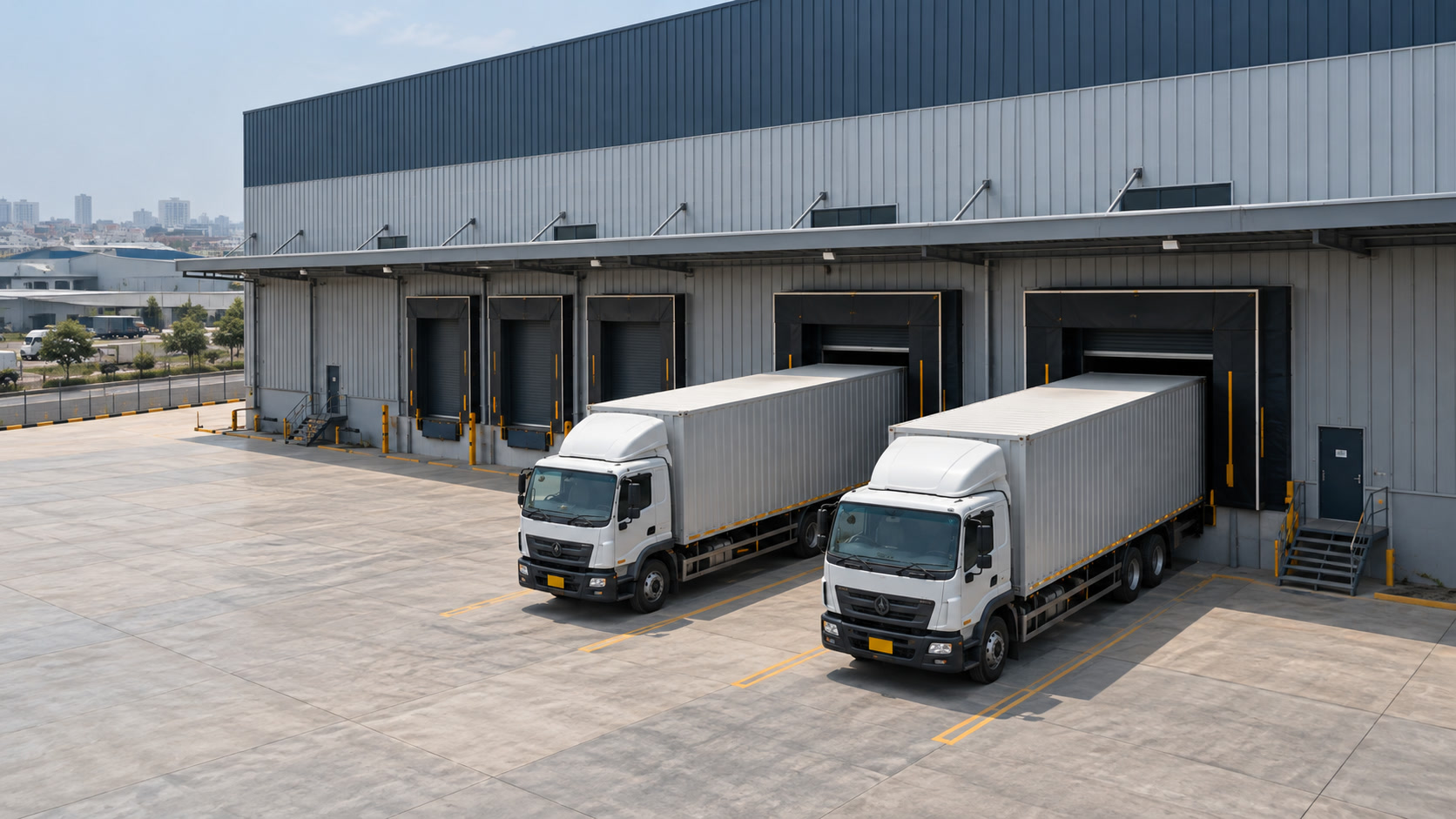
  3. A container truck reversed into a dock door.

    03

    The dock

    A warehouse earns its keep in the minutes a truck spends with its doors open.

    Docking stations and a truck-accessible approach for distribution and last-mile fleets.

    Fulfilment and FMCG do not fail in the racking. They fail at the dock: a tight turn, a door that is too low, a queue that misses the driver’s hours. The dock is the product.

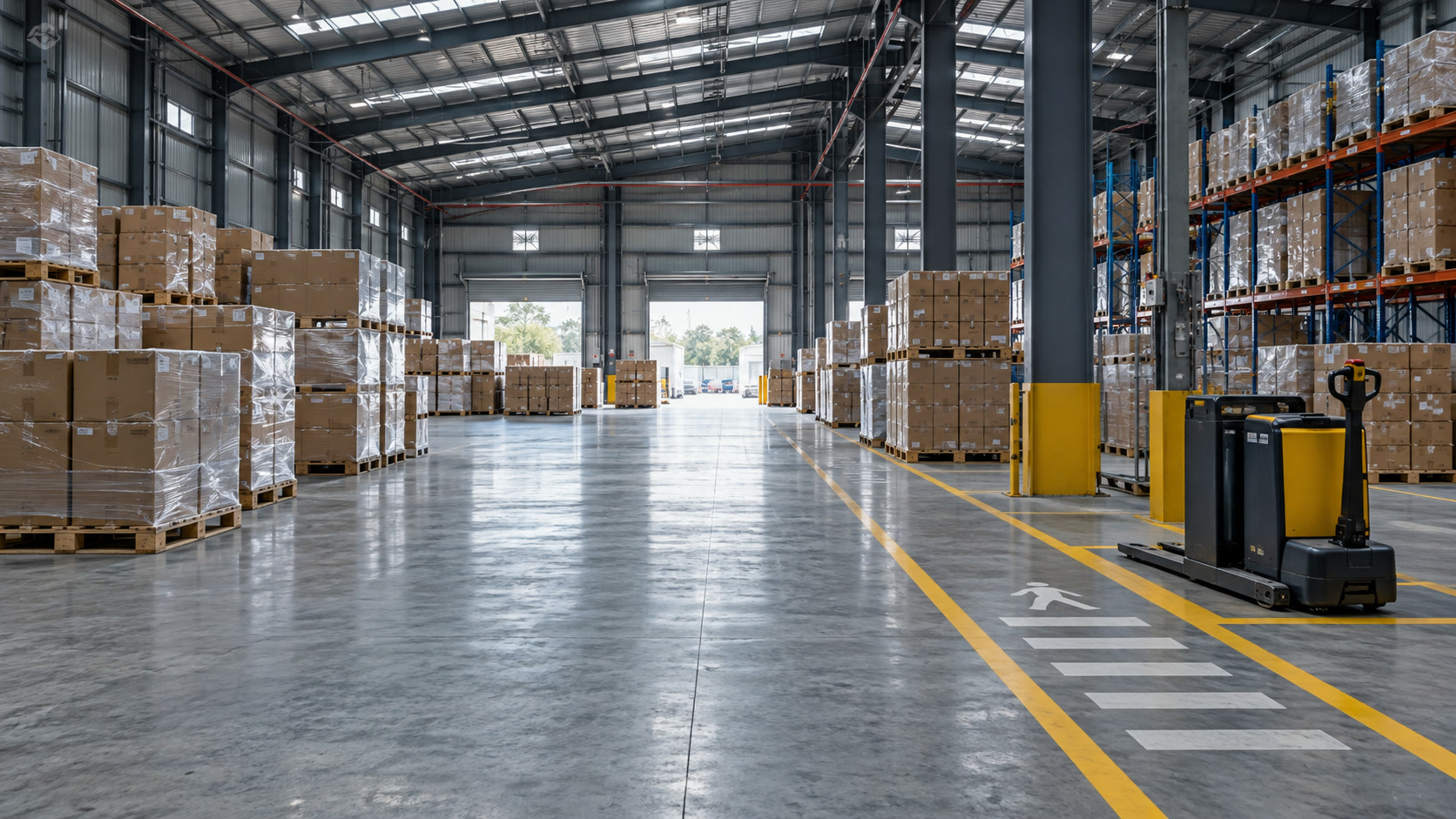
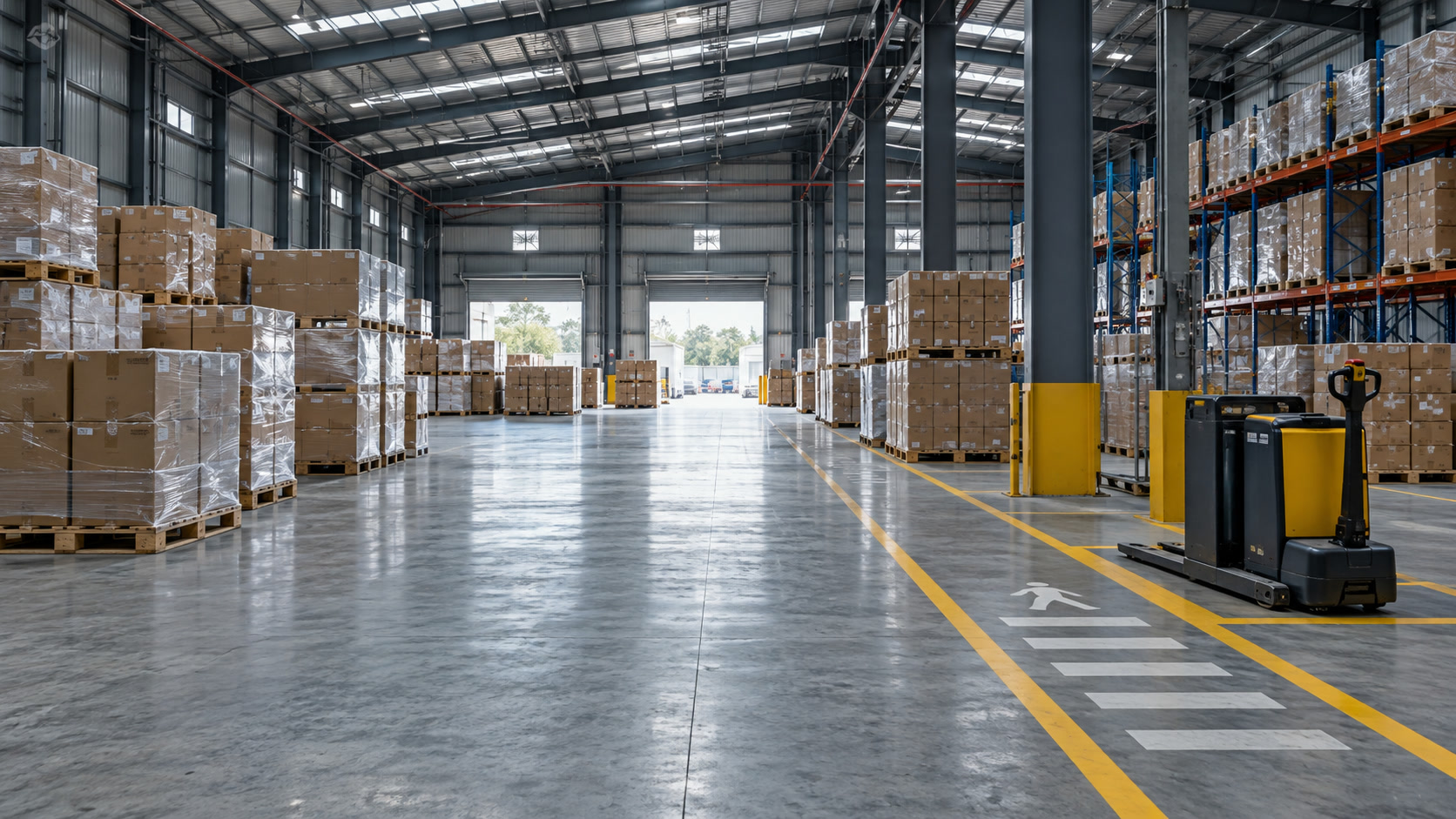
  4. A forklift carrying one pallet down a warehouse aisle.

    04

    The floor

    A forklift tells the truth about a floor within a year.

    RCC flooring, specified for the load, not for the photograph.

    Joint failure, dust, and a slope that fights the pallet jack all become the occupier’s labour cost. A Grade-A floor is a promise that the building will not invoice itself as downtime.

  5. Clear-span roof and clerestory light over the warehouse.

    05

    The skin

    Heat, leak, and a dark aisle are three different ways to spoil the same shipment.

    Tata BlueScope or Safintra on the roof. Asian Paints on the skin, moisture- and fungus-resistant. Philips on the light.

    The names are published because a specification you cannot audit is a brochure. An occupier’s engineer can stand under this roof and know who made it.

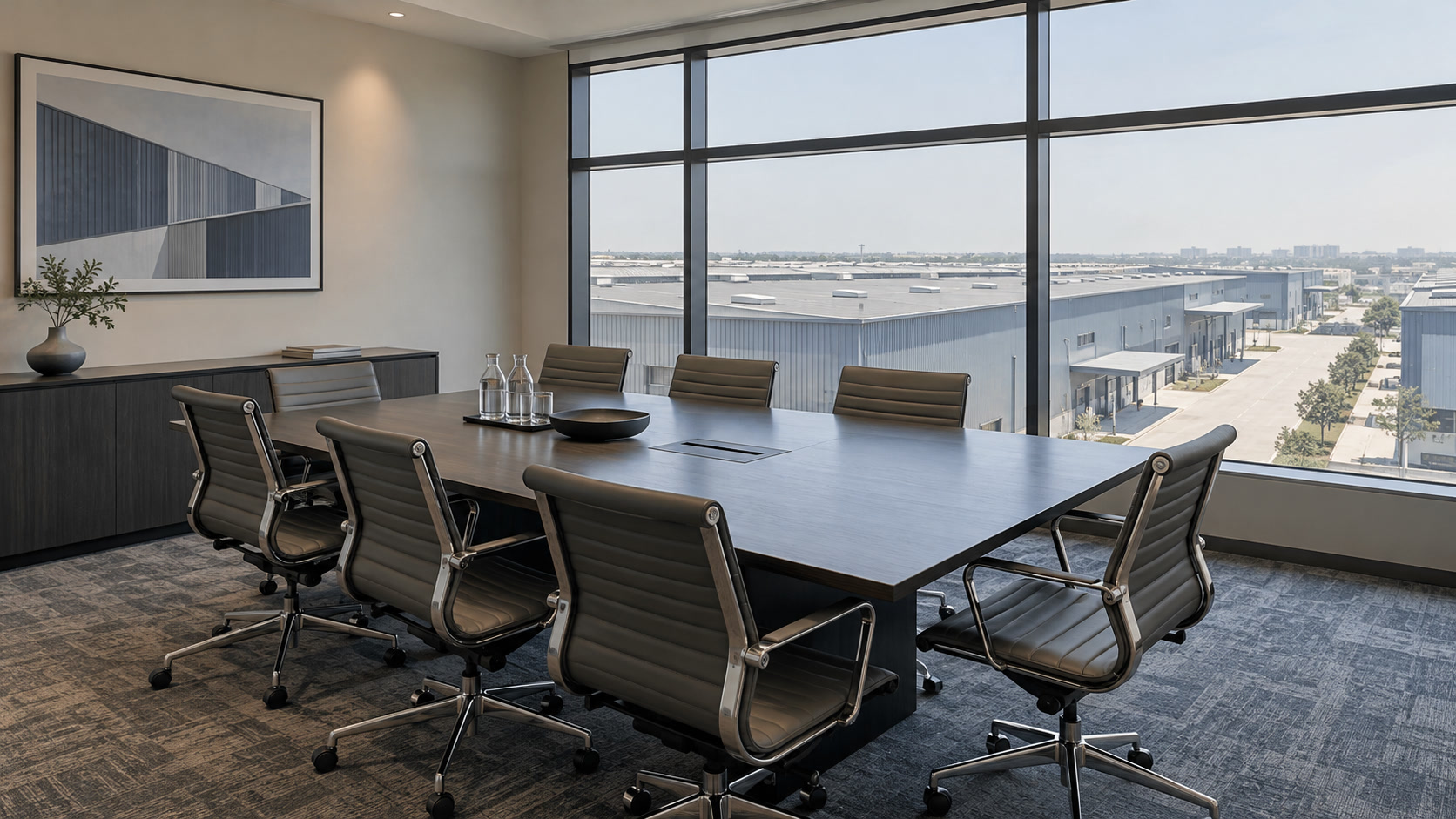
  6. A working office beside the warehouse floor.

    06

    The office

    The people who run a warehouse should not spend an hour getting to it.

    Administration sits inside the park. One landlord. No second commute.

    Control towers, inventory desks, and the manager’s office belong next to the dock they are responsible for. A separate commercial lease is how a supply chain becomes two companies that do not speak.

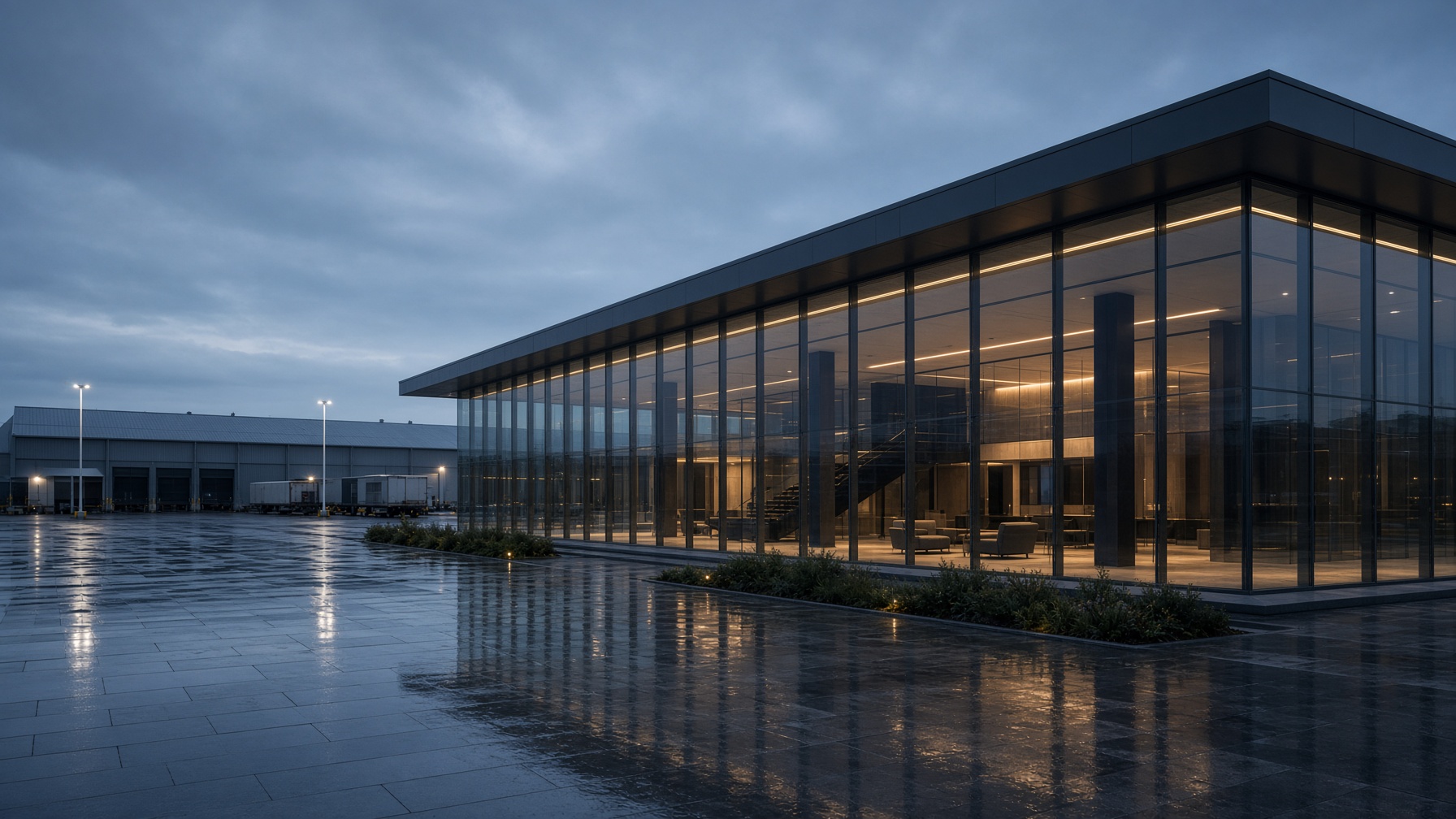
  7. Container trucks on the road toward a lit campus.

    07

    The night

    Commerce does not keep office hours, and a scanner without a line is a clipboard.

    Twenty-four-hour power, three-phase and single-phase. BMC or MIDC water. Jio and Airtel leased lines.

    A warehouse operator’s system, an FMCG dispatch, a marketplace cutoff at midnight — all of them assume the building is still awake. Power and fibre are not amenities. They are the shift.

  8. A brass fitting on dark timber. The building is meant to be kept.

    08

    The lease

    A lease is a plan measured in years. The name on it should still be there at the end.

    Typically five to ten years, renewable, GST-compliant. The landlord is the Group.

    Distribution networks are planned in decades. The occupier needs the same owner on the other side of the table in year seven as in year one. Ownership is the alignment.

Who the building is for

Six kinds of work. One shell.

  • Manufacturing supply

    Inbound from the factory, a shell an auditor can walk, and an owner still there when the line is retooled.

  • Light manufacturing and assembly

    A floor that can take a line, power that does not blink, and a dock for parts in and finished goods out.

  • E-commerce fulfilment

    Dock turns, a floor that survives peak, and a line that stays up through a midnight cutoff.

  • Third-party warehousing

    A building they can put their name on without inheriting the landlord’s unfinished work.

  • FMCG distribution

    Monsoon-proof stock, hygiene, and a dock that can take a full inbound and an outbound the same morning.

  • Chemicals and life sciences

    A compliant shell, traceable services, and a landlord who treats an audit as a file, not a surprise.

  • BFSI back office

    The office inside the park: quiet rooms, power, and a campus people will actually come to.

  • Media and technology

    Leased fibre, security that can be described to a client, and a lease long enough to install once.

The country, not the company

The country these buildings sit in.

Published figures for India’s industrial and warehouse market through the third quarter of 2026. They describe the country. They are not this house’s area, occupancy, or income.

59.1 msf
India absorption, January to September 2026. Up 6.9% on the year.
24.3 msf
Taken up in the third quarter alone, 14% above the year before.
31%
Manufacturing’s share of that quarter’s demand, up from 27%.
26%
Still taken by third-party warehouse operators. Fulfilment did not leave.

If the station you care about is the dock, say so.

Write to the desk